
The Rolls-Royce Merlin V12 is almost certainly the most famous aircraft engine in history, I’m sure there are other contenders of course but I’m convinced the Merlin has them beat.
- Rolls Royce Aircraft Engine Manuals
- Rolls Royce Aeromanager
- Rolls Royce Aircraft Engine Manuals Log In
- Rolls Royce Aircraft Engine Manual Parts
Rolls Royce Aircraft Engine Manuals
Although most believe the engine is named for the famous wizard of the same name from the legend of King Arthur, it’s actually named after the Merlin bird of prey (Falco Columbarius), a species of falcon that’s been a popular falconry bird for centuries.
Rolls-Royce began developing a new aero engine in the early 1930s, it was initially named the PV-12 which stood for “Private Venture 12-Cylinder”, as the engine has been developed without any government financial assistance. This seems almost laughable now considering how much the Allied governments of the world would eventually rely on the engine that the PV-12 would become.
Rolls-Royce Merlin Engine – Basic Specifications
The Rolls-Royce Merlin is a 27 liter (1,650 cu. in.) V12 with an aluminum alloy crankcase, aluminum alloy cylinder blocks with high-carbon wet steel liners, and aluminum alloy heads.
Phosphor bronze was used for the exhaust valve guides with cast-iron used for the inlet guides, four valves are used for each cylinder – two inlet and two exhaust. The inlet valves are steel with “stellited” ends as are the exhaust valves, though the exhaust valves also have sodium-cooled stems.
The Rolls-Royce Merlin is a British liquid-cooled V-12 piston aero engine of 27-litres (1,650 cu in) capacity. Rolls-Royce designed the engine and first ran it in 1933 as a private venture. Initially known as the PV-12, it was later called Merlin following the company convention of naming its piston aero engines after birds of prey. After several modifications, the first production variants. Rolls Royce Merlin Aircraft Engine Hand & Electric Starter Rotax & BHT Manual - AP 11181 Vol. I Part III - 1942.
Each camshaft operates 24 rockers, with 12 on each side and each valve has twin concentric coil-springs. The 12 pistons are lightweight alloy, each is uses a forged nickel-steel connecting rod, which is attached to a forged nitrogen-hardened nickel-chrome molybdenum steel crankshaft.
Initially the Merlin produced approximately 1,000 hp, but by the end of the war this number had over doubled, and Merlins were reliably producing well over 2,000 hp.
The Merlin Engine Shown Here
The engine you see here is mounted to a display stand and finished to a very high degree of quality throughout, it also comes with a rare Merlin tool kit containing almost everything you need for servicing the engine.
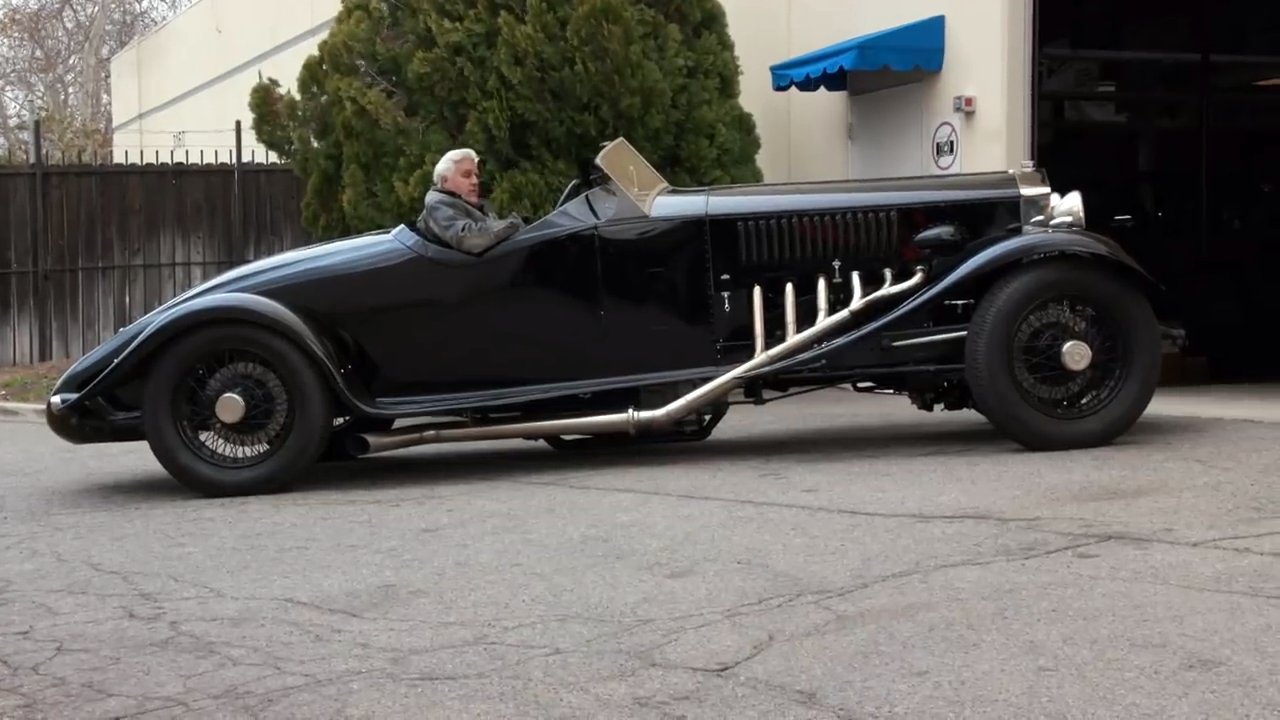
Over the years since the end of WW2 Merlin V12 have been fitted to an astonishing variety of vehicles, from cars and boats to tanks and just about everything in between.
Rolls Royce Aeromanager
If you’d like to read more about this engine or register to bid you can click here to view the listing.
Images: ©2019 Courtesy of RM Auctions
Rolls Royce Aircraft Engine Manuals Log In
Ben has had his work featured on CNN, Popular Mechanics, Smithsonian Magazine, Road & Track Magazine, the official Pinterest blog, the official eBay Motors blog, BuzzFeed, and many more.
Silodrome was founded by Ben back in 2010, in the years since the site has grown to become a world leader in the alternative and vintage motoring sector, with millions of readers around the world and many hundreds of thousands of followers on social media.
This article and its contents are protected by copyright, and may only be republished with a credit and link back to Silodrome.com - ©2020
| During World War II, thousands of Rolls-Royce Merlin engines powered several famous aircraft such as the Supermarine Spitfire, Hawker Hurricane, DeHavilland Mosquito, P-51 Mustang, and the Avro Lancaster. The Merlin engine was developed in England in 1936, and was used in the prototype Spitfire F39/34. In 1939, a Rolls-Royce Merlin MK II engine, producing 1,030 hp, was selected to power the first production Spitfire. In early 1941, Packard Motors was licensed to build Merlin engines. The majority of Packard built Merlins were destined for what is considered by most to be the best fighter of World War II, the North American P-51 Mustang. The first Mustangs were powered by the Allison V-1710 engine, but by 1943, the Mustang P51B & C, (RAF Mustang III) were powered by a V-1650-3 Packard Merlin engine producing 1,520 hp. In Canada, the Packard Merlins were designated Merlin 28 and 29. Later models of the Curtiss P-40 were also powered by Packard Merlins. |
| The standard engine for the P-51D Mustang was the liquid-cooled, l2-cylinder, Packard-built, Rolls-Royce Merlin V-1650-3 or -7 developing 1,400 hp at take-off. The original Mustangs were fitted with low-altitude rated Allison V-1710 engines, but as the possibilities of the Mustang as a high-altitude fighter was realized, it was decided to fit the aircraft with a Merlin engine. For this purpose, four Mustang Mark Is were sent to Rolls-Royce for use as development aircraft, AL963, AL975, AM203 and AM208. Merlin 61 series engines were installed with a frontal radiator, in addition to the normal ventral scoop. The Mustang/Rolls-Royce combination was an instant success and it was adopted as standard for all the Mustang variants. To increase engine production, Packard was selected to build the Merlin under license. |
| The Merlin was fitted with an injection-type carburetor and a two-stage supercharger. The carburetor however, was at a disadvantage in maintaining positive fuel flow during negative G maneuvers causing the engine to sputter or cut-out. Unlike the German Daimler-Benz DB 601 which uses fuel-injection, this system maintains positive fuel flow when pulling negative Gs. Fuel-injection allowed many a Messerschmitt Bf 109 pilot to escape a Spitfire on its tail and return to fight another day. The -3 engine supercharger cut-in at 19,000 feet, and the -7, between 14,500 and 19,000 feet. The supercharger was automatic, but could be manually over ridden. In order to give the engine an extra burst of power during an emergency, the throttle could be pushed past the gate stop by breaking the safety wire. If used longer than five minutes, there was a risk of severe engine damage. There was no doubt when the supercharger cut into the high-blower position on the P-51 Mustang. The aircraft shuddered violently and pilots had to learn to anticipate the cut-in and reduce throttle. When descending, the change to low-blower took place at about 14,500 feet, and the only indication of the event was a drop in manifold pressure. The Packard Merlin drove either a four-blade Hamilton-Standard Hydromatic or Aeroproducts automatic, constant-speed propeller. Coolant (30/70 ethylene-glycol/water) and oil radiators were installed in the pronounced belly scoop radiator fairing under the fuselage. One weakness of the Merlin was that it could be put out of action by a single bullet or shrapnel, but this applied to all liquid-cooled engines and did not detract from the Mustang's all-round capabilities. The Mustang was a welcome sight to the Boeing B-17 Fortress crews as they plunged deep into German skies during the daylight offensive against the Nazi armament industries. The Merlin went through continuous development throughout World War II, ending up with at MK 71. The Merlin series was then superseded by the Griffon series. |
| Specifications: | |
|---|---|
| Rolls-Royce Merlin I | |
| Date: | 1936 |
| Cylinders: | 12 |
| Configuration: | V, Liquid cooled |
| Horsepower: | 1,030 (768 kw) |
| RPM: | 3,000 |
| Bore and Stroke: | 5.4 in. (137 mm) x 6 in. (152 mm) |
| Displacement: | 1,650 cu. in. (27 liters) |
| Weight: | 1,320 lbs. (600 kg) |
 Return To Engine Index.
Rolls Royce Aircraft Engine Manual Parts
© The Aviation History On-Line Museum.All rights reserved.
Created November 29, 2006. Updated October 12, 2013.