
Operating and Service Instructions 1. Flight Manual Report n. 139G0290X002 - Rotorcraft Flight Manual (4 display) 2. Maintenance Manual Maintenance Planning Information 39-A-AMPI-00-P Maintenance Publication 39-A-AMP-00-P 3. Service Letters and Service Bulletins As published by Agusta S.p.A., AgustaWestland S.p.A. Excellence in Helicopter Maintenance Services Heli-One performs the full range of AW139 maintenance services and is a Leonardo Authorized Service Center. Heli-One is dedicated to providing the best maintenance, repair and overhaul on your AW139 and goes beyond the OEM manual to find solutions to keep your fleet mission ready. Allowing you do deliver operational success with the Helicopter Division's products. Leonardo AW Customer Portal is the single solution for the Civil/Commercial and Dual use Government/Military Customers of the Helicopter Division. We ensure the highest level of security for data storage, thanks to well proven data security features.
- Aw139 Helicopter Maintenance Manual Instructions
- Aw139 Helicopter Maintenance Manual Software
- Aw139 Helicopter Cockpit
- Aw139 Helicopter Specifications Pdf
Italian operator and Leonardo Excellent Service Center Alidaunia Srl is pioneering Real-Time HUMS for Helicopter Emergency Medical Services (HEMS) and civil protection missions with the selection of SKYTRAC and Leonardo aircraft connectivity for their AW139 and AW169 fleet.
The Alidaunia Real-Time HUMS solution supports a safe and proactive approach to maintenance by streamlining previously manual processes, simplifying troubleshooting and speeding the detection of emerging issues. Through the same compact hardware kit, Alidaunia also gains access to real-time tracking, Iridium PTT group-talk, automated EFB forms and real-time FDM services.
With this latest implementation project, SKYTRAC and Leonardo are now set to provide real-time connected services on AW139, AW169 and AW189 aircraft.
“HUMS is a vital tool that helps detect potentially critical issues early. However, in complex and remote missions, HUMS data may not be available until many hours of flight have passed. This system, championed by SKYTRAC and Leonardo, allows operators like Alidaunia to receive critical HUMS information faster and with less effort. By combining this solution with other essential tools such as group talk and tracking, the operator receives exceptional value from a single, lightweight solution,” said SKYTRAC VP Sales Jan van der Heul.
“In HEMS missions, lives hinge on our ability to deliver services to our clients safely and efficiently. The SKYTRAC and Leonardo solution enables fast and accurate data delivery and allows us to communicate better between our team members. This in turn allows us to stay abreast of changing conditions and to respond faster. We see this project as a major step forward for ourselves and for the HEMS industry,” said Alidaunia CEO Roberto Pucillo.
Leonardo has been a long-time player in HUMS and predictive maintenance and has introduced advanced solutions into its newest generation of popular AW helicopters including the AW169. According to Leonardo, by partnering with customers and SKYTRAC on Real-Time HUMS, the company pushes the concept of prediction even further. Through Real-Time HUMS, customers can identify in advance if a helicopter is available for the next flight or if a maintenance action is required.
Leonardo continues to work towards new RT HUMS capabilities that will allow their customers to pass on even greater levels of service to their clients. Thanks to Real-Time HUMS, the AW helicopter maintains a secure connection to the Internet and allows algorithms to be updated based on intelligence gathered by the rest of the fleet. In practice, the connected helicopter becomes an IOT device that uses machine learning to produce innovative new services.
With this project, Alidaunia also becomes an authorized SKYTRAC connectivity partner in Italy.
Image courtesy Alidaunia Srl#
About SKYTRAC
SKYTRAC is aviation’s full-service,a2a_kit>
A great example of an MRO partnering with an OEM on a specialized repair/modification project, and providing AW139 operators an alternative to extensive downtime, Heli-One is currently offering a tailboom exchange program, where an operator can exchange their unmodified tailboom for a fully modified tailboom from Heli-One retrofitted with bulletins BT139-159 Rev. B and BT 139-200.
The AgustaWestland AW139 is a very successful medium-sized aircraft that has reliably secured its role in the world of helicopter operations. But, like many new aircraft types that experience teething problems after introduction to service, the AW139 has had to face this challenge, specifically with issues relating to its tailboom. However, Heli-One, a large helicopter MRO located in Delta, British Columbia, Canada, is working with the OEM on an interesting tailboom repair and replacement program.
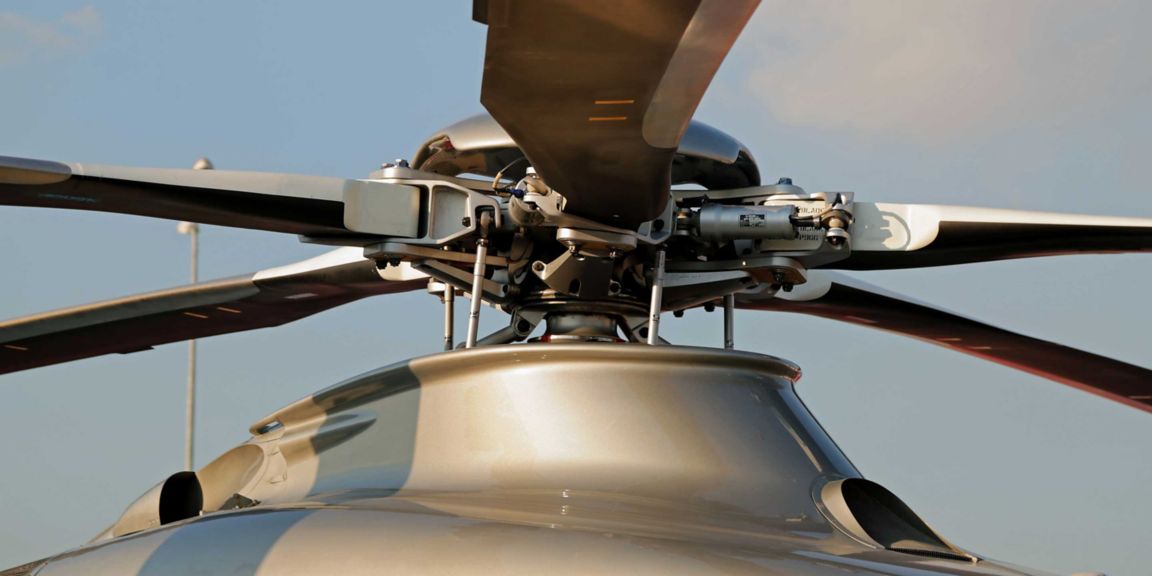
The AW139 is a conventional twin-engine medium size transport helicopter, powered by two Pratt & Whitney PT6C-67C turboshaft engines which drive a five-blade fully articulated main rotor system and a four-blade tail rotor. The first AW139 flew in February 2001 in Italy and the first customer aircraft was delivered in 2003.
The AW139 helicopter is successfully used in a variety of roles including emergency medical service, law enforcement, executive transport, search and rescue, maritime, and offshore oil and gas operations.

Aw139 Helicopter Maintenance Manual Instructions
On Aug. 25, 2009 an incident occurred involving an AW139 operated by Gulf Helicopters in Doha, Qatar. During the taxiing phase the aircraft experienced a structural problem with its tailboom. No one was hurt as a result of this event.
Background
Prior to the Qatar event operators started to report debonding of the tailboom’s lateral panels. On Aug. 27, 2008, European Aviation Safety Agency (EASA), alongside AgustaWestland issued an EASA AD 2008-157 for inspection to detect debonding of the panels by tap-hammer within 100 flight hours, then at 300-flight hour intervals. The inspection was performed in accordance with Agusta Bollettino Tecnico (Technical Bulletin) BT139-134.
In reaction to the Qatar event, on Sept. 4, 2009, EASA AD 2009-198-E was issued which superseded AD 2008-157. This AD reduced the inspection interval to a 25-flight hour or 30-day initial inspection interval, and a 50-flight hour recurring inspection to be completed in accordance with BT139-193. Some specific aircraft serial numbers had the initial inspection reduced even further to a five-flight hour initial inspection in accordance with BT139-194.
Less than two months later on Oct. 28, 2009, EASA AD2009-234-E was issued to supersede AD2009-198-E. One day later it was revised to the now currently and still applicable EASA AD2009-234-E R1, in order to change serial number applicability in one section of the initial issue of the AD.

This latest AD changed the inspection requirements to include a daily general visual inspection of the tailboom right hand side skin. The tap-hammer inspection remained at 50-flight hour intervals for most aircraft, except a few tailboom part number and aircraft serial number combinations. Aircraft fitted with these tailbooms had the inspection interval reduced to 25 flight hours.
All the inspections called out in EASA AD2009-234-E R1 are to be accomplished in accordance with BT139-195 Rev. B. At this time, any defects found that are beyond the set limits must be reported to the manufacturer. Repair schemes are created by AgustaWestland product support engineering department on an aircraft by aircraft basis.
Tailboom construction
The construction of the tailboom assembly consists of two separate pieces, the tail cone, and the vertical fin. The tail cone is between STA 8,700.09mm and STA 11,020.0mm, and includes two lateral bonded sandwich-panels having aluminum skins and nomex honeycomb core, a bottom sandwich-panel of the same construction, a front aluminum frame, and six short longerons, attached to the lateral panels and to the front frame. Six fittings with bolts attached to the short longerons connect the tail cone to the fuselage.
The vertical fin is attached to the tail cone at STA 11,020.0 mm and extends aft from STA 11,020.0 mm to STA 13,349.3 mm. The vertical fin includes the frame at STA 11,020.0 mm, the front and rear longerons, and a top rib and middle rib with attachment points for the tail gearbox, intermediate gearbox, and horizontal stabilizer or ”tail-plane.”
The tailboom modification
There are two technical bulletins, BT139-159 Rev. B, and BT139-200, currently issued by AgustaWestland that strengthen the tailboom structure. These two bulletins are fully compatible with each other and can be applied together to the same tailboom in order to achieve maximum tailboom strength.
After operators had started reporting debonding of the tailboom panels but before the event in Qatar, AgustaWestland issued a technical bulletin BT139-159. This bulletin is aimed at improving the structural strength of the tailboom by replacing the original two lateral sandwich-panels with new bonded panels having aluminum skin and aluminum honeycomb core. The weight and balance changes for this bulletin are negligible and so far AgustaWestland is keeping this bulletin optional.
After the event in Qatar the second bulletin, BT139-200, was issued. This bulletin consists of four longeron reinforcement or extensions to be installed on both the upper and lower right and left hand sides to extend the existing longerons from STA9140 mm to the STA 11,020 mm butt splice that attaches the vertical fin to the tail cone. With the extensions installed, the longerons extend the complete length of the tail cone assembly greatly improving its strength.
This bulletin however comes with a weight and balance price. Eighteen kilograms is added at an arm of 10,081 mm shifting the center of gravity aft. On the long nose AW139 this is of no concern, however it may cause some hesitation on the short nosed aircraft depending on its configuration and operations. Carrying out BT139-200 eliminates the inspections called out in BT139-195 Rev. B as it is now not applicable.
Performing BT-200 can be done on its own without removing the tailboom from the aircraft; however, paint damage will be done to the tailboom. Performing BT139-159 Rev. B requires a need for a full shop with specialized tooling and technicians. The tailboom must be removed from the aircraft and disassembled using specialized tooling, a jig, and a holding fixture for reassembling the tailboom parts.
This project requires several technical experts familiar with heavy structural repairs and with the AW139, the tailboom history. There are three of these fixtures in the world, only two of them are currently in operation. One is located at AgustaWestland in Italy, and one at Heli-One in British Columbia, Canada. Heli-One has a dedicated crew that has visited the Italian facility for specialized training to perform this work.
Panel replacement also will require a painting facility in order to restore the paint scheme on the tailboom. Considering the tailboom must be removed from the aircraft for this bulletin, it is recommended that BT139-200 is also performed at this time.
The labor hours required will be reduced by performing the two bulletins together, and the tailboom will only need to be repainted once. Performing both bulletins is ideal to obtain the strongest possible tailboom structure.
Aw139 Helicopter Maintenance Manual Software
Tailboom removal can be accomplished using an overhead hoist and sling. When the tailboom is being removed for replacement, it is recommended that it be removed “undressed” of all components, wiring, and plumbing before tailboom removal. Document this by taking pictures of the removal of the wiring harnesses as it helps when it comes time to lay them out in the new panels. Once everything is stripped from the tailboom it will be very light and will make removal very easy. It is a very manageable 73 Kg.
Removing the tailboom in order to accomplish BT139-159 Rev. B will cause extensive downtime, especially once you factor in shipping to a facility with the proper tooling, modification of the tailboom, paint, and return shipping.
A great example of an MRO partnering with an OEM on a specialized repair/modification project, and providing AW139 operators an alternative to extensive downtime, Heli-One is currently offering a tailboom exchange program, where an operator can exchange their unmodified tailboom for a fully modified tailboom from Heli-One retrofitted with bulletins BT139-159 Rev. B and BT 139-200.
Aw139 Helicopter Cockpit

Aw139 Helicopter Specifications Pdf
Heli-One is an official AgustaWestland service center for the AW139 and has the full support of AgustaWestland in carrying out these modifications.
Lanny Reynolds is certificated by Transport Canada as an aircraft maintenance engineer with nearly 10 years experience in a range of helicopter maintenance roles. He has worked overseas with CHC Helicopter International supporting offshore oil and gas operations and has supported heavy lift utility operations. He joined Heli-One in 2007 and is now currently the AW139 lead-hand.