
Sudden appearance of dirt, sand, debris in the water supply. A reduction in well flow rate. A new bacterial or other contamination problem in the well water. Leaks into a well casing risk carrying surface or groundwater contaminants into the water delivered by the well. The well casing is one of the most important parts of your well; it keeps debris, insects, and sediment out of your water. However, it’s also one of the most commonly replaced parts of a well, so it’s not out of the question that yours may be cracked or damaged (especially if it’s older).
A common problem with wells that leads to the need for repairs is a cracked casing. The casing is the tube that extends above the ground and leads to the pump and water below. A casing can last for many years, but under the right circumstances it can be damaged and need to be repaired. Here's how a casing can be damaged, the signs of a bad well casing, and how it's repaired.
What Causes A Well Casing To Crack
A well casing can crack when the ground shifts, such as when there is an earthquake. It's also possible for a casing to crack if it's struck by lightning during a bad storm. The portion of the casing that extends above the ground can be cracked if you run into it with a mower or car. Cracking is more likely when the casing is old, and sometimes the casing just deteriorates due to old age.
When To Suspect The Casing Is Damaged
If you run into the top part of the casing, you can see the damage you cause. The cap or tube might be cracked or chipped. When you see damage, you'll want to call a well service company and have it repaired right away to keep contaminants and bugs out of your water supply. When the crack happens underground, you won't be able to see it. However, the crack lets sand get into the water so you may notice sediment in your water when it comes out of the faucet. The sand may cause clogs in the system that lead to low water flow.
How A Cracked Casing Is Repaired
If you do need to repair the well, the well specialist determines if there is a crack inside the casing and how deep it goes by passing a camera into the pipe. This shows the extent of the damage and the area that needs to be repaired. Repairs are done by placing a new liner inside the casing. The new lining might be the length of the entire casing or it might be a small patch that covers the cracked area. The liner is placed in the tube, and an inflatable tool expands and presses it against the sides of the casing to press the patch in place.
If the crack is above the ground, the well service may recommend that you extend the casing while repairing it and change the grade of the surrounding soil so it slopes away from the casing so it is easier to see and avoid in the future.
A residential well is a great resource and can provide you and your family excellent water for many years. In most cases, they require minimal servicing. Most wells can operate for years without maintenance, but that doesn’t mean your well doesn’t need occasional servicing. It is important to know the signs of well water problems so you can identify a possible problem before it becomes too serious.
How Does a Well Pump System Work?
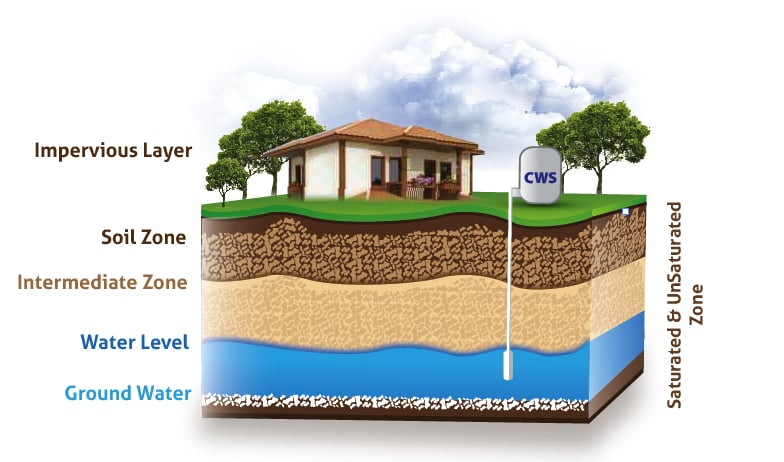
While wells can work a few different ways, a typical water well has a submersible pump that pumps water directly into a house. Some wells have pumps that are called jet pumps. These are located on the surface or top of the well and are used in conjunction with a pressure tank. A well water pump system maintains a constant supply of pressurized water throughout the house and piping system. The well pump switches on and off with a pressure switch in order to maintain water pressure.
Common Signs of Well Issues
While there are multiple reasons your well pump could be experiencing issues, there are 7 typical signs of well water issues:
1. Well pumps air and well yield is reduced
If your kitchen faucet blasts out a mixture of air and water when you turn it on, this is a big indicator that something is wrong with your well. This could mean that your water table has dropped at or below the well pump and the pump is drawing in air during the pump cycle. This could also be caused by a broken well pump drop pipe. These pipes can become broken, corroded or develop cracks which can allow for air to be sucked in.

2. Well is pumping sand or sediment
If your well starts to fill with sand, this is a common sign that your well is silting in or filling with sand and silt. Another cause for sand in your water could be that the well screen has become degraded and is allowing sand or sediment from the gravel pack around the well screen through. Sand will wear out the pump valves and fill up the bottom of the well.
3. Water pressure is low
Low water pressure can have many causes, but most commonly can mean a failing well pump, stuck check valve, partially closed or bad ball valve, or leaking/failing pressure tank. In one case, iron bacteria to clog the pipe leading to the pressure switch which causes the pressure switch to incorrectly sense the pressure.
4. Power bill has greatly increased
When a pump wears out or becomes blocked with sand, silt or iron bacteria it has to work harder than if it was in good shape or unblocked. When your pump has to work harder, it can result in an increasingly higher power cost. If the check valve in the well goes bad, this can also contribute to a high power bill.
5. Water quality has changed
Well Casing Repair
If your water is spurting out of the tap or if air is dissolved in the water, this could mean a problem for your well. Some groundwater tables can contain distinct types of gases which may be dissolved in the water but later come out of solution and will cause the water to spurt or sputter at the tap.
6. Bubbles or dissolved gases in the water
Symptoms Of A Cracked Well Casing Joint
It isn’t unusual for small air bubbles to appear in a glass of water from a kitchen faucet. These bubbles can be both naturally occurring and or caused by mechanical reasons. As mentioned above, some groundwater tables contain usually small amounts of various types of gases, which can be carbon dioxide, methane, hydrogen sulfide or other gases. Some of thee gases can be harmful and cause safety and health problems, so if you are seeing quite a few bubbles you should have your water tested. Bubbles can also occur when the water level in a well is low, causing air to get inside of the pump.

Symptoms Of A Cracked Well Casing Repair
7. The pressure switch and pump continuously cycle on and off
A leak in your home or corrosion of casing, liner or screen can cause the well pump to run continuously. Holes will allow water of undesirable quality to enter your well. You should be on the lookout for leaking toilet flush valves, reverse osmosis systems, iron filters and the backwashing filter systems that could be malfunctioning. Some other common causes are a failed check valve or the pressure tank losing its captive air pressure.
What Should You Do If You See One or More of These Signs?
Now that you know some signs to be on the lookout for, it is important to know that you shouldn’t try to fix any of these problems on your own. Regular maintenance and inspections are very important in order to help try to prevent any costly well pump issues.
Well pump systems can be tricky to fix, which is why it should be left to the experts. When you notice a problem, you should shut your water pump off and call Mosman Well Works right away. We are available 24/7 for emergency services, so don’t hesitate to give us a call! We specialize in emergency well pump replacement, no well water issues, and water treatment services for residential and commercial.